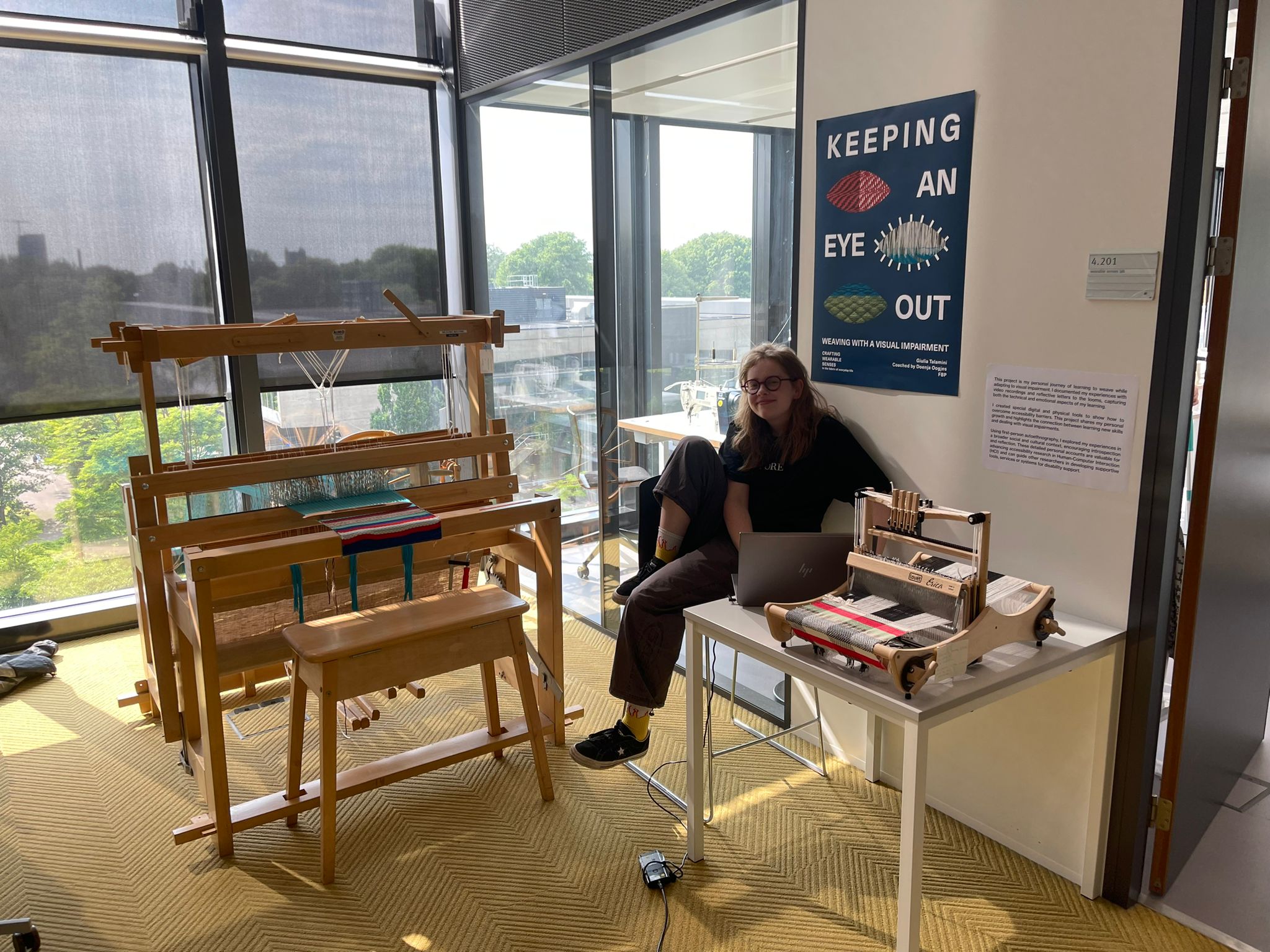
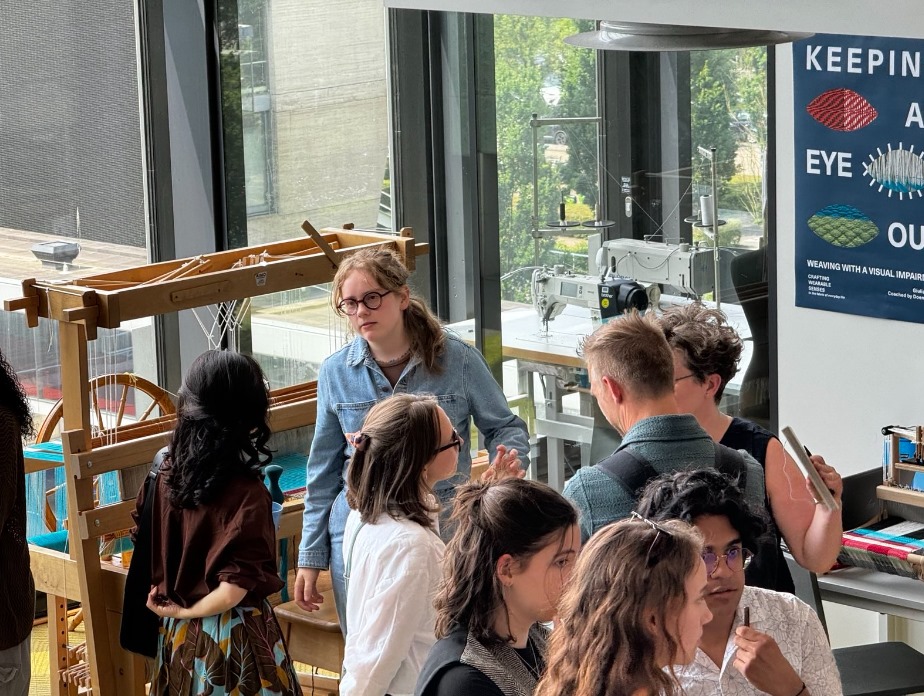
This project is my personal journey of adapting to visual impairment through the process of learning how to weave. By documenting my experiences with video recordings and reflective letters addressed to the looms, I captured both the technical and emotional dimensions of my learning process. I developed ultra-situated digital and physical assistive technologies to illustrate approaches for overcoming accessibility barriers. This project not only provides a narrative of my personal growth but also emphasizes the relationship between learning new skills and visual impairments. I made use of a first-person autoethnography to thoroughly examine personal experiences within a broader socio-cultural context, fostering introspection and reflexivity. These rich personal accounts are important data points for advancing accessibility research within Human-Computer Interaction (HCI), and offer insights to other researchers for further research or the design of assistive technologies. I reflect on the use of letters addressed to the loom and videos as a means of tracking process and emotions. I also suggest researching a new approach for creating accessible designs called "designed by", where the user is centralized in the design process.
Creativity and Aesthetics
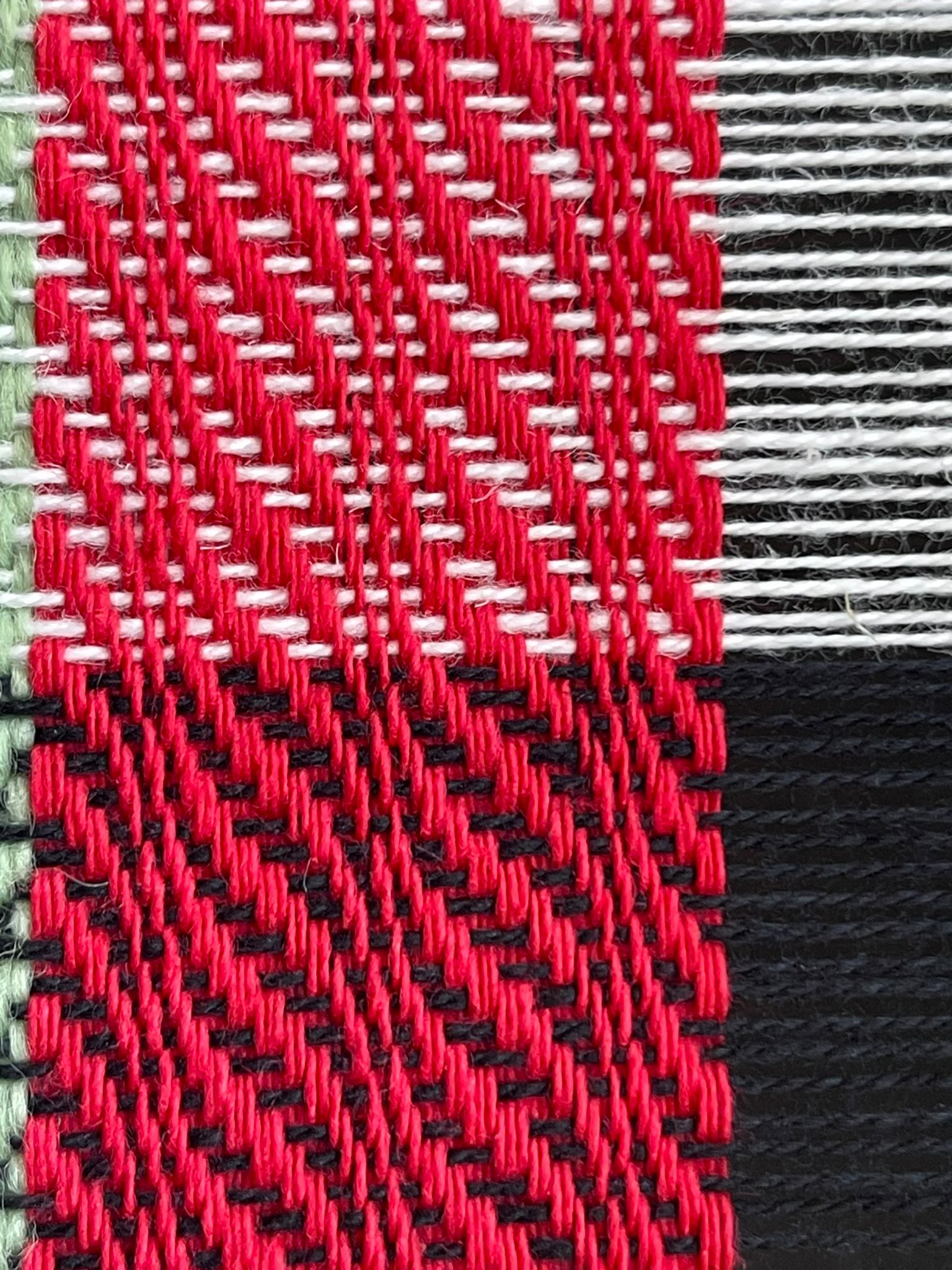
The biggest growth in creativity and aesthetics I experienced in
my project came from a realisation of a shift in aesthetics due to
my impairment. Previously focused on conventional beauty, my
perspective shifted towards appreciating the beauty inherent in
accessibility. This shift has enriched my design approach,
focusing on functionality and inclusivity over mere visual appeal.
Throughout the project, I dug deeply into weaving, experimenting
with patterns to explore their aesthetic and qualities. This
journey allowed me to blend creativity with practicality, striving
to create designs that not only look pleasing but also serve a
meaningful purpose in enhancing accessibility and usability. I
have learned more about embracing diverse perspectives and
prioritizing functionality as a cornerstone of aesthetic value
Business and Entrepreneurship
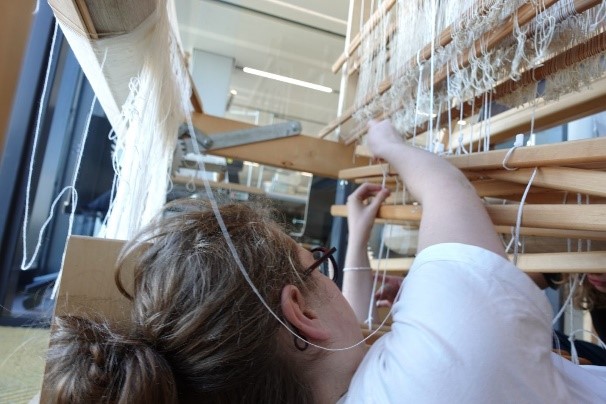
In my journey of growing in the EA of business and entrepreneurship, the most growth I expereinced stemmed from realising the intersection of inclusivity and impact. As can be read in my piv, as a feminist designer, my commitment lies in creating designs that cater to diverse groups and effecting meaningful change on smaller scales. However, I came to understand that impactful ideas and products must also reach their intended audiences to make a difference. I sought validation from accessibility companies like Studio Boey and Ayushman from Hable, whose insights confirmed the relevance and potential impact of accessibility design and showed a nice perspective on how they find their audience. I would also like to propose a business model where insurance covers my suggested method of "designed by". This approach not only enhances user engagement and satisfaction but also reduces the neglect of assistive technologies over time, ultimately saving insurers money compared to conventional support models.
User and Society
Rooted in feminist design theories, I believe design is about
creating inclusive, equitable, and responsive solutions that
genuinely benefit diverse communities. Adopting participatory
design methods, including my "designed by" approach in my FBP, has
been instrumental in amplifying user voices and ensuring their
needs shape outcomes. Engaging with four blind artists provided
invaluable insights that, while not directly implementable in my
project, reaffirmed the importance of designing for user happiness
and satisfaction. Feminist theories and user-centred design
principles underscore my approach, challenging traditional
one-size-fits-all solutions in favour of products that
authentically resonate with diverse identities and experiences. By
integrating psychological and sociological awareness into my
process, I strive to empathize with users, ask meaningful
questions, and conduct thorough research to inform and validate
concepts. I learned a lot about these feminist theories during my
FBP, mostly by reading "The feminist designer" by Alison Place
(Place, 2023). This holistic, socially conscious approach not only
enhances the user experience but also positions design as a
catalyst for positive societal change, capable of addressing
broader cultural, political, and ethical implications.
Place, A. (2023). Feminist Designer: On the Personal and the Political in Design. MIT Press.
Technology and Realisation
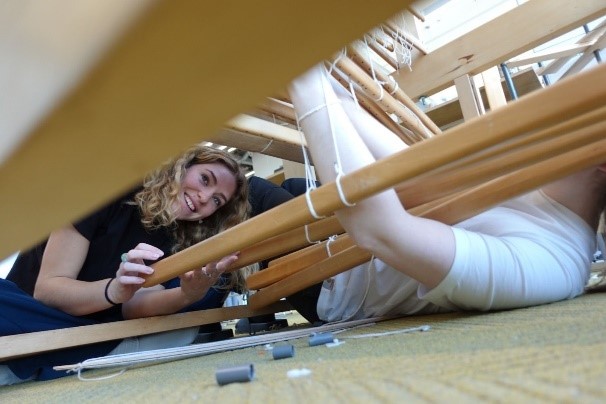
The challenge of losing all my files just two weeks before the deadline forced me to efficiently remodel most of my designs. This experience not only taught me the importance of meticulous file management but also prompted me to delve into parametric design basics, enhancing my ability to create adaptable and scalable models. Additionally, I expanded my proficiency in prototyping using Figma, leveraging its capabilities to prototype effectively even at a granular level. Restoring and fixing the loom was another cool learning experience, providing insights into mechanical workings and the ins and outs of restoration processes. These experiences improved my understanding of the importance of understanding technical specifications and making informed judgments to ensure that it worked well.
Math, Data and Computing
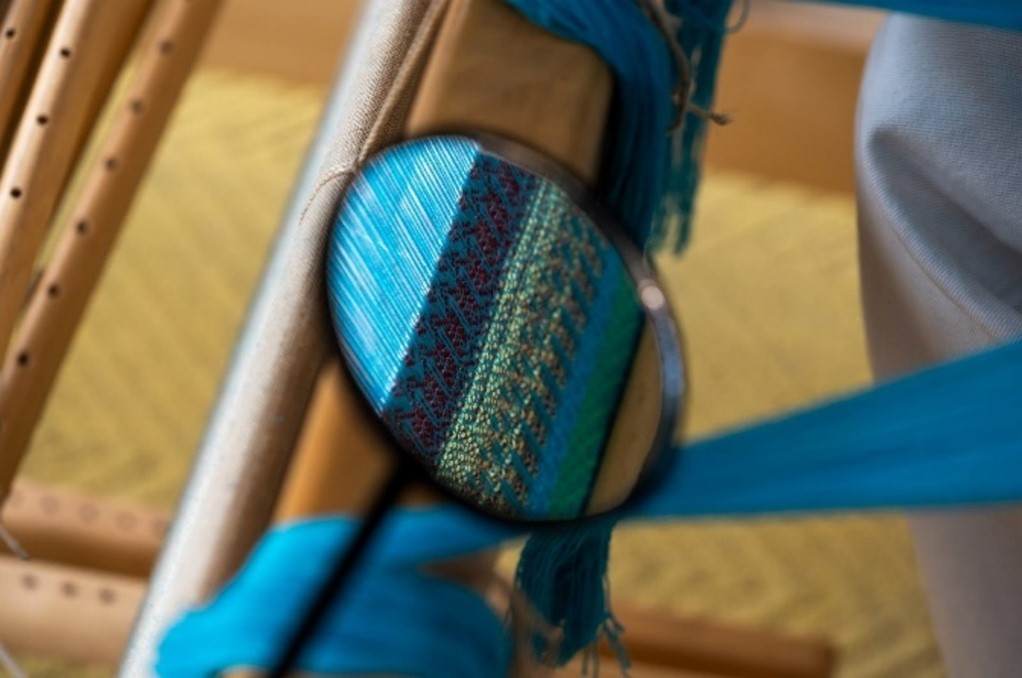
Using Python and Processing, I developed pattern generators that not only reinforced my proficiency in these languages but also expanded my understanding of their application in interactive programming contexts. Despite having prior experience with both languages, I gained valuable insights into optimizing their use for creating dynamic and responsive solutions.
Design and Research processes
I expanded my understanding of research methodologies through reading Creswell's book on the five methods for qualitative design. This knowledge was developed further by delving into autoethnography, where I explored numerous papers that both employed and discussed this approach. I had never worked according to a first-person perspective method before, but I have grown to believe that all (accessibility) designs should be based on the real experiences of the target audience one designs for. That is why I also find it of great importance to stimulate first-person autoethnographic accounts to be shared with other reserachers. My design process was meticulously planned and executed, allowing me to adhere closely to my schedule. The project was extremely enjoyable, confirming a passion for research that I am eager to pursue further in my master's studies.
Reflection
At the beginning of my FBP, I set three goals: mastering Adacad, determining my focus for my master's studies, and presenting a project I could be proud of. I succeeded in learning how to navigate Adacad, though I found it less accessible than anticipated. This experience taught me the importance of selecting tools that accommodate my reduced vision, rather than assuming all free tools will be suitable. Despite this, creating my own pattern-generating program was a positive step, demonstrating that many possibilities remain open to me. What I would still like to learn is to create a very high level prototype. To work with materials like acrylic and install hardware into such a construction. This project did not need such a prototype, but I would love to learn how I can combine my skills of modeling, programming and hardware installation into one big prototype. This will also help to make the abstract ideas into a very clear object, which can help to get everyone on the same line as I describe to aim for in my PIV. I have decided to continue my master's at TU/e, focusing on applying feminist theories to tangible designs, these thangible designs being high(er) level prototypes or products. For more on this, see the "Future" section. I am incredibly proud of what my project has become. Although the journey has been challenging, especially given its personal and vulnerable nature, I am thrilled with the growth and fulfillment it has brought me. Presenting my work authentically and using my skills has been incredibly empowering. This experience has ignited my excitement to work on more projects in the future. Additionally, I discovered a love for research during this process, and I am eager to pursue more research opportunities during my master's studies. Above all, I am proud of my overall student life experience. I have developed a deep passion for design and am eager to continue in this field. I am proud of the person I have become, always striving to learn and grow. I have built an amazing group of friends and never shied away from challenges; whether it was setting up a company, organizing events, participating in competitions, or trying new sports. I have grown in ways I never imagined when I started my bachelor's in the midst of the COVID pandemic, and I am forever grateful for the experiences that have shaped me into who I am today.